Your Client Already Decided Before the Sales Call
Trust Compression
•
Framework
•
12
min read

Most premium service providers believe deals are won in conversations. They invest in pitch decks, proposal structure, objection handling, and follow-up systems. These activities assume the decision happens during interaction.
Serious buyers operate differently. They observe quietly for months before any outreach. They notice who speaks about their problem in a way that feels precise. They search names, review websites, scan external mentions, and form a private conclusion about credibility.
When urgency finally appears, they do not start evaluating the market from scratch. They reach out only to the few providers who already passed this silent evaluation process. Everyone else is excluded before having a chance to present capability.
The result is misunderstood pipeline friction. Providers optimize the visible stage of selling while losing at the invisible stage where trust actually forms.
This is not a performance problem in sales execution.
It is a structural weakness in how authority signals are built and distributed.
Positioning statements describe services in broad, interchangeable terms
Evidence relies on generic praise rather than measurable outcomes
Brand presence changes tone, focus, or promise across platforms
Authority proof exists mainly on owned channels instead of third-party environments
Outreach attempts to persuade instead of demonstrating understanding
Market commentary follows trends rather than expressing a stable point of view
Each of these increases evaluation friction.
Premium buyers run a mental audit long before initiating dialogue. They are not consciously scoring providers. They are looking for signals that reduce risk.
They look for clarity of perspective. Providers who repeat common industry language are perceived as replaceable. A specific viewpoint signals independent thinking and experience.
They look for evidence tied to real outcomes. Numbers, timelines, and operational detail create confidence because they can be checked or logically assessed.
They look for social validation among peers. Third-party references, mentions, and discussions create the sense that credibility is collectively recognized rather than self-declared.
They look for consistency. If a provider appears different across channels, buyers sense instability even when they cannot articulate the cause.
They look for emotional steadiness. Calm communication implies certainty. Over-selling implies dependency on winning the deal.
These judgments accumulate gradually.
By the time outreach occurs, the buyer’s internal narrative is already stable.
Sales training often focuses on persuasion mechanics. This includes urgency framing, feature comparison, and closing techniques. These tools assume the buyer is undecided.
In premium environments, indecision is rare by the time a conversation happens. The call becomes confirmation rather than discovery. Providers who failed the earlier trust audit never reach this stage.
This mismatch creates wasted effort. Businesses invest energy in improving conversion tactics instead of strengthening the signals that determine whether conversion opportunities exist at all.
The outcome is longer cycles, price resistance, and proposals that quietly disappear.
Time-to-Trust increases.
High-value buyers leave before confidence forms.
Consistent premium client acquisition is not accidental. It emerges from a structured authority system that reduces uncertainty at scale.
Narrow Operational Claim
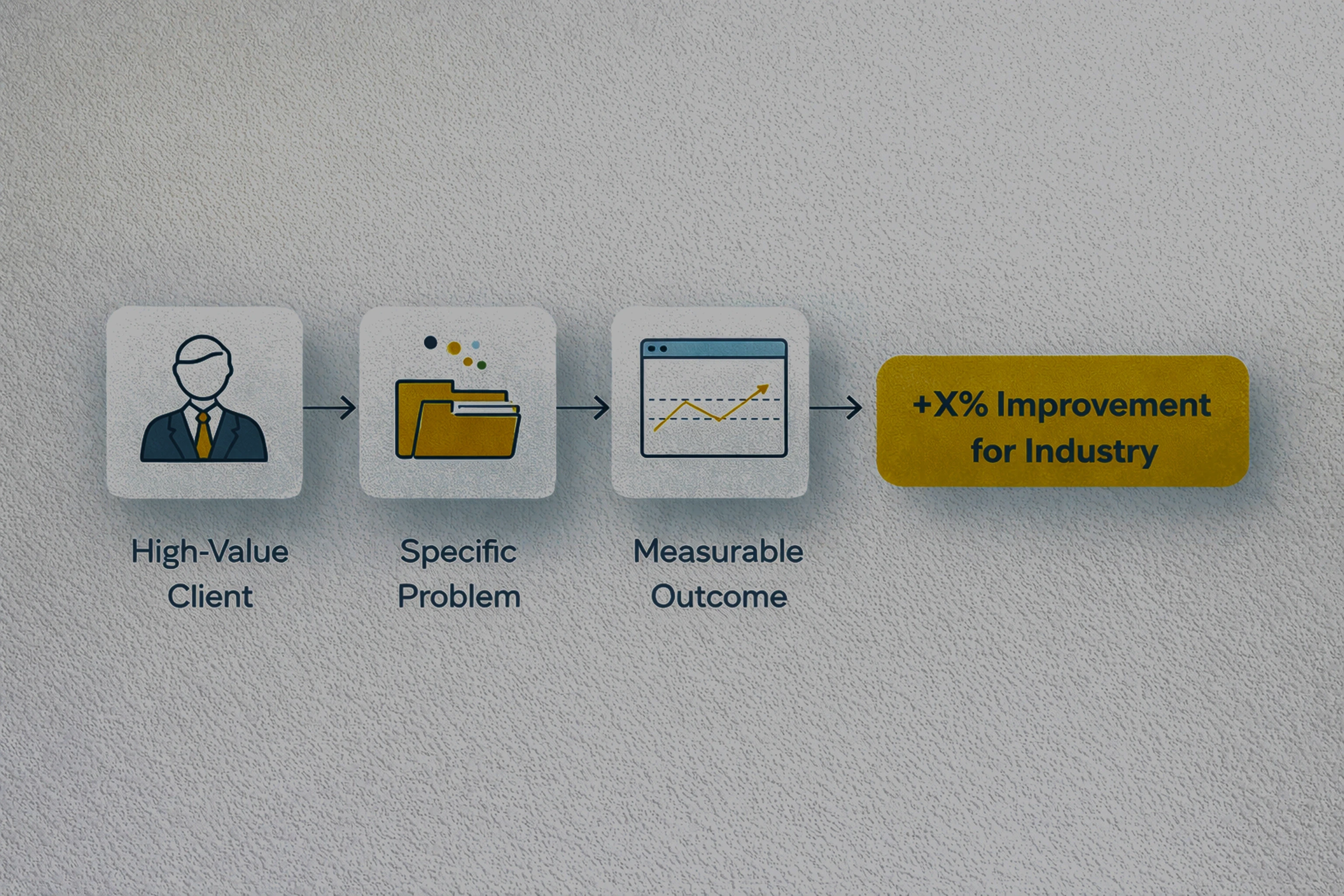
Broad positioning dilutes memory and recognition. When a provider claims to serve everyone, no specific buyer feels addressed. A focused claim tied to a defined situation creates instant relevance.
Specificity also functions as proof. Precise descriptions of past outcomes signal that work actually occurred. Vague promises resemble marketing rather than evidence.
This shift changes competitive dynamics. The provider is no longer compared to all alternatives but only to the option of doing nothing or choosing a generalist.
Evidence That Compounds Credibility
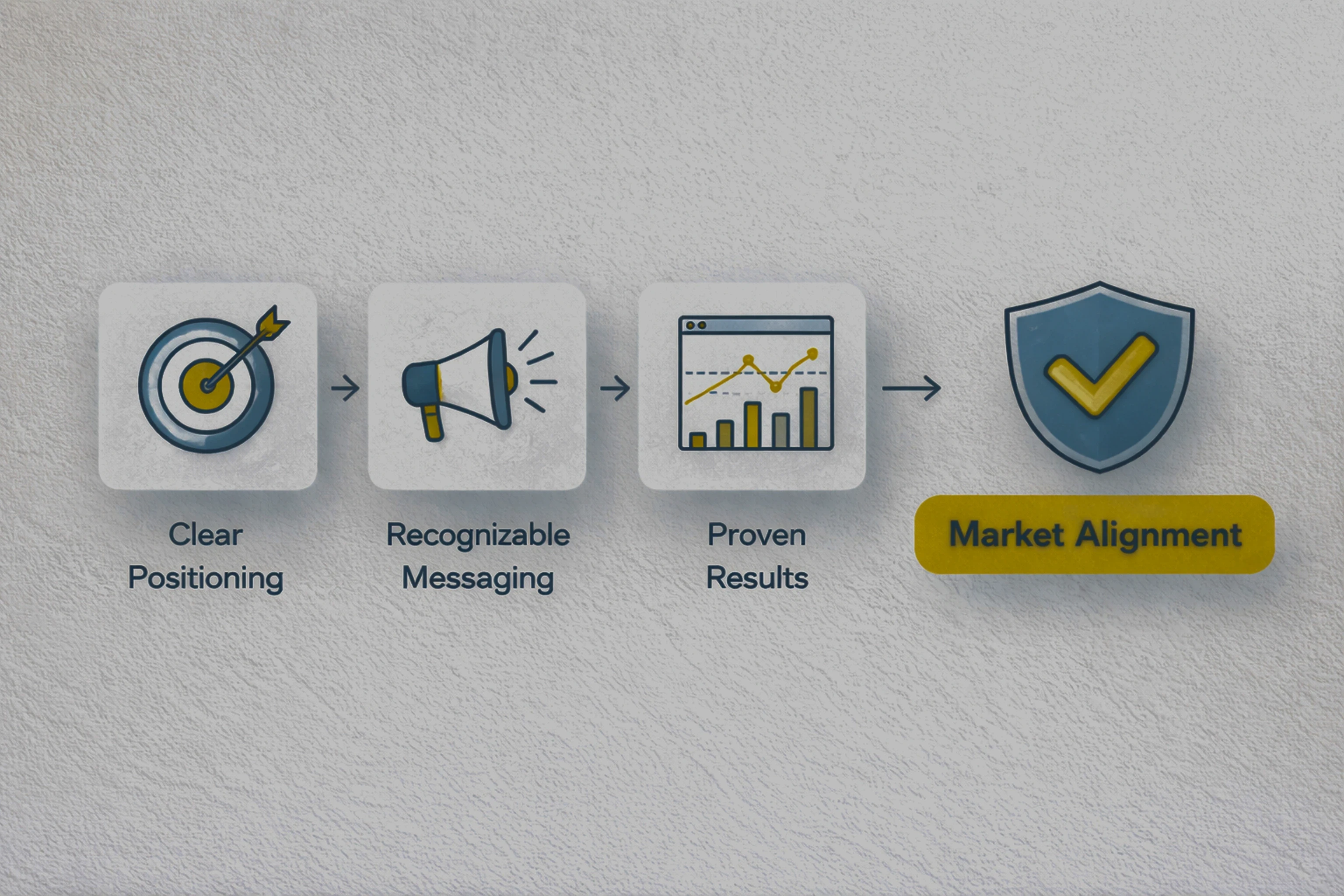
Testimonials that emphasize experience or satisfaction do little to resolve risk. Decision-relevant proof requires structured narratives showing before conditions, intervention logic, measurable results, and timeframe.
Credibility strengthens when similar evidence appears repeatedly. Patterns imply system capability rather than isolated success.
External validation amplifies this effect. Mentions in public discussions, publications, and independent platforms convert individual claims into collective reputation.

Consistent Market Signal
Trust weakens when a brand appears fragmented. Variation in positioning, tone, or focus across channels creates subtle doubt. Buyers interpret inconsistency as uncertainty about expertise or direction.
Signal stability requires repeating the same core belief about the market over time. This repetition allows observers to internalize the provider’s perspective and associate it with authority.
Selective absence also communicates intent. Ignoring irrelevant trends reinforces perceived focus.
Value Demonstrated Before Promotion
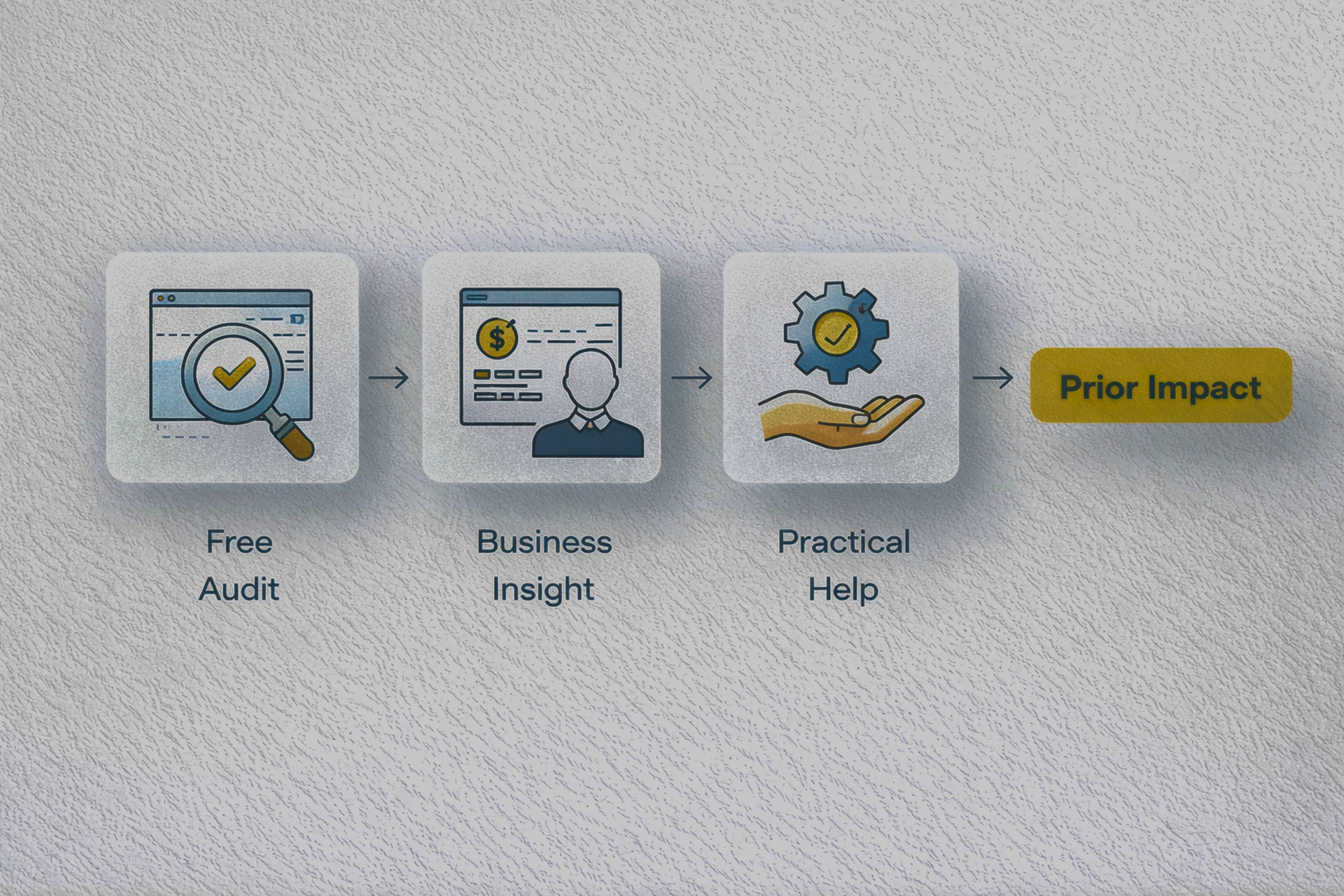
Awareness alone does not produce trust. Promotional communication is discounted because buyers understand the incentive behind it.
Publicly shared insight that solves real problems creates familiarity and credibility simultaneously. Useful contributions in forums, commentary, or outreach establish peer-level relevance rather than vendor positioning.
Hyper-relevant outreach illustrates attention and competence. Specific observations about a prospect’s situation feel collaborative rather than transactional.
Authority systems do not produce immediate visible results. Early stages involve sharpening positioning, clarifying evidence, and stabilizing communication.
Gradually, engagement quality changes. Prospects reference past content, initiate conversations with prior context, and arrive with pre-formed expectations. Sales interactions become shorter because foundational trust already exists.
As reputation compounds, pricing resistance decreases and retention improves. Clients who selected based on clear evidence understand the value structure and remain aligned longer.
This cycle strengthens itself. Better positioning attracts better clients. Better clients generate stronger results. Stronger results produce clearer evidence. Evidence reinforces positioning.
The asset created is time-dependent and difficult to replicate quickly.
Trust architecture influences not only acquisition but also retention. Clients who enter relationships with accurate expectations are less likely to disengage abruptly.
Recurring revenue models reinforce this dynamic. Continuous value delivery becomes necessary for relationship stability. This accountability improves performance, producing stronger outcomes that further enhance authority signals.
The system evolves from transaction optimization to reputation optimization.
An increasing share of early evaluation now happens through AI tools. Buyers ask recommendation questions and receive answers shaped by cross-platform credibility signals.
Brands that appear consistently with specific positioning and verifiable evidence across multiple sources are more likely to be surfaced. Self-contained digital presence appears weaker to both human researchers and algorithmic retrieval systems.
Authority building therefore serves dual audiences.
It influences private human judgment and machine-assisted discovery simultaneously.
Client acquisition at the premium level is not primarily about persuasion skill. It is about shaping perception months before direct interaction.
Providers who focus only on closing tactics address the final stage of a process largely determined earlier. Those who build clear positioning, visible evidence, stable messaging, and public value contribution influence the stage where real decisions occur.
The most effective sales conversation is the one where the buyer already expects to proceed. Everything prior to that moment determines whether such conversations exist.